Why Preschool Outdoor Play Matters (A Lot)
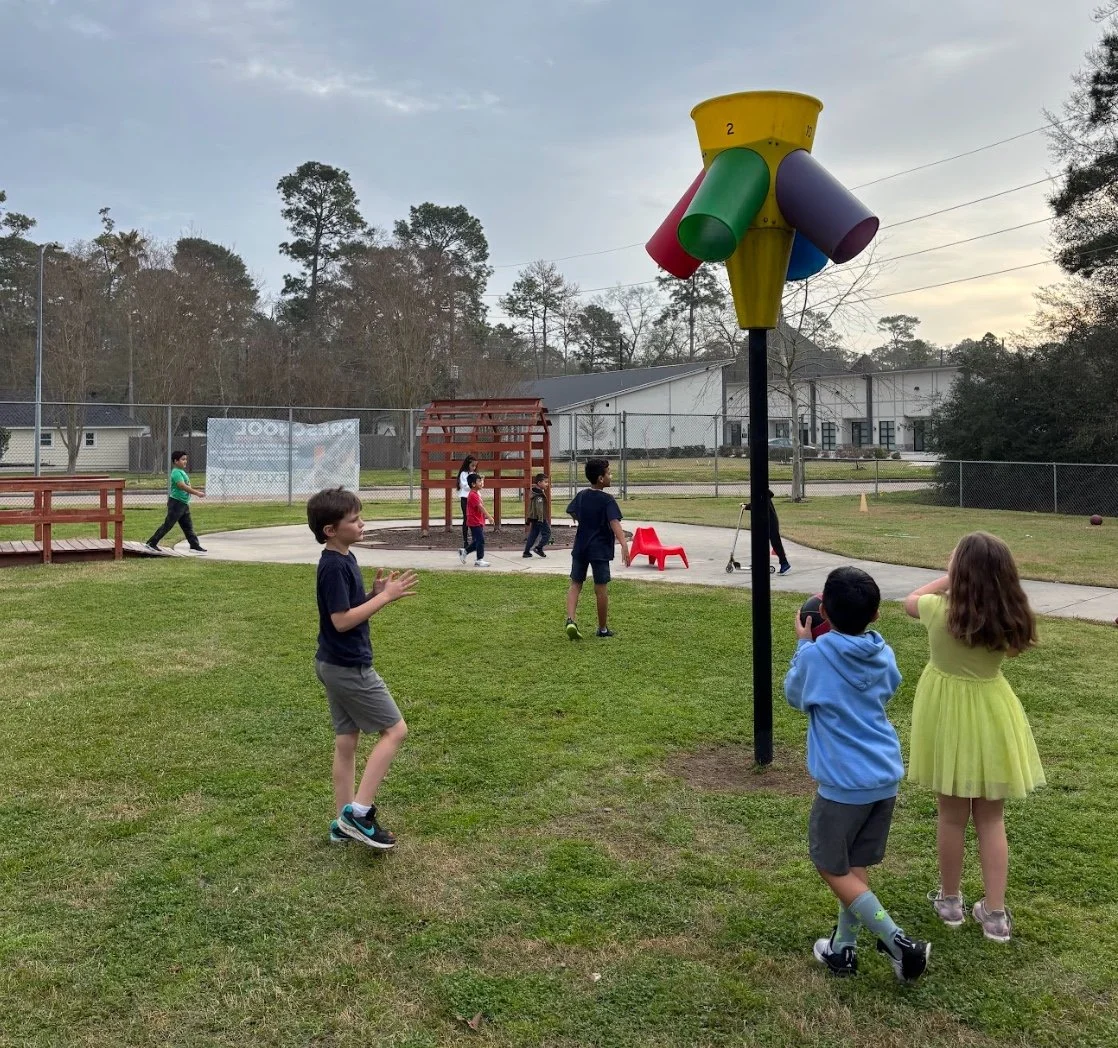
Most parents think of outdoor time as the break between the "real learning." It's not. For preschoolers, outdoor play at preschool is where some of the most important development actually happens.
The research on this is clear and consistent. The question is whether your child's preschool treats it that way.
It Builds Way More Than Strong Legs
When a 3-year-old climbs a structure, they're not just exercising. They're assessing risk, building spatial awareness, and practicing persistence when they slip and try again. When two kids negotiate who gets the slide first, they're working on turn-taking, impulse control, and basic conflict resolution.
Gross motor skills are the obvious outcome. The deeper stuff — executive function, emotional regulation, social problem-solving — happens at the same time, in the same 20 minutes outside. You can't replicate it indoors.
Unstructured Time Is the Secret Ingredient
There's a difference between structured outdoor activities and unstructured outdoor play. Both have value. But unstructured play, where kids decide what to do and figure it out as they go, builds something structured time can't: autonomy.
When a child follows their own curiosity outside, hits a dead end, and tries something else, they're practicing self-direction. That's one of the most important skills a kindergarten teacher could hope to see. Kids develop it by doing it, outside, with time to experiment.
The Reggio Connection
In Reggio-inspired early childhood education, the outdoor environment is considered a "third teacher." The space itself teaches. A thoughtfully designed outdoor environment gives children direct experiences with the physical world, with each other, and with their own thinking.
That philosophy shapes how we approach outdoor time at Explorers Learning Center at K2 in Cypress, TX. Kids aren't just let outside to burn energy. Staff pay attention to what kids are drawn to, what they're trying to figure out, and what questions come up. Those observations feed back into the learning day.
What Happens When Kids Don't Get Enough
The research is consistent: inadequate outdoor play time shows up in behavior, focus, and emotional regulation. Kids who get more time outside tend to focus better when it counts. Outdoor time isn't competing with learning. It's supporting it.
Texas summers create real constraints — heat, humidity, all of it. A program with a strong outdoor component plans around that. Earlier outdoor windows, shaded spaces, water play. It's solvable, but it takes intentionality.
What to Ask a Preschool About Outdoor Play
When you're evaluating preschools in Cypress, TX, a few questions are worth asking: How much outdoor time do kids get each day? What does unstructured play look like versus structured activities? How does staff engage outside, present and observant, or supervising from the edge?
The answers tell you a lot about whether a program treats outdoor play as an afterthought or a priority.
If you'd like to see how we do it at Explorers Learning Center at K2, we'd love to show you around. Visit us at explorerslearningcenter.com/schools/k2.
Explorers Learning Center at K2 is a Reggio-inspired preschool in Cypress, TX serving children from 6 weeks through school age. We're a Texas Rising Star partner and proud to serve families across northwest Houston